
哔哩哔哩
GT Voice: Chinese investment could help Germany stabilize its talent base_我的网站

一 |
Germany's industrial woes have increasingly become a hot topic of discussion. The latest Engineer Monitor report from professional association Verein Deutscher Ingenieure and the German Economic Institute offers a new look at the issue.
The report showed that there were 58,392 unemployed individuals in the engineering and information technology (IT) professions in the fourth quarter of 2025, the highest level since the survey began in 2011.
Compared with the previous year, the number of unemployed increased by 16.7 percent, according to German media reports on Sunday.
These figures lay bare the challenges confronting the country's manufacturing sector. The reasons for the industrial woes are multiple. The soaring energy costs caused by geopolitical conflicts, the decline in exports caused by rising protectionism and low external demand, and the structural pain caused by industrial chain restructuring are all squeezing the space of German manufacturing.
Manufacturing is the backbone of Germany's economy, and engineers and IT specialists constitute the core force that sustains this pillar. For decades, the country's reputation for "Made in Germany" excellence was built on the expertise of these skilled professionals. Regardless of the macroeconomic ups and downs, preserving the stability and continuity of its industrial talent pool represents a strategic bottom line for Germany.
Should large numbers of highly skilled technical professionals leave the industry or sit idle, industrial research and development (R&D) and production cycles will be disrupted. Over the longer term, such a waste of human capital will erode Germany's industrial innovation capacity and, ultimately, undermine the foundations of its global competitiveness.
In this context, the urgent task for Germany is to create sufficient quality positions for its technical talent. Should it fail to do so in the short term, then Germany needs to embrace a more open‑minded development approach. Shoring up its manufacturing base cannot be achieved solely through protecting domestic companies; it also requires a significant expansion of effective investment to create enough high‑quality jobs that can attract and retain skilled talent.
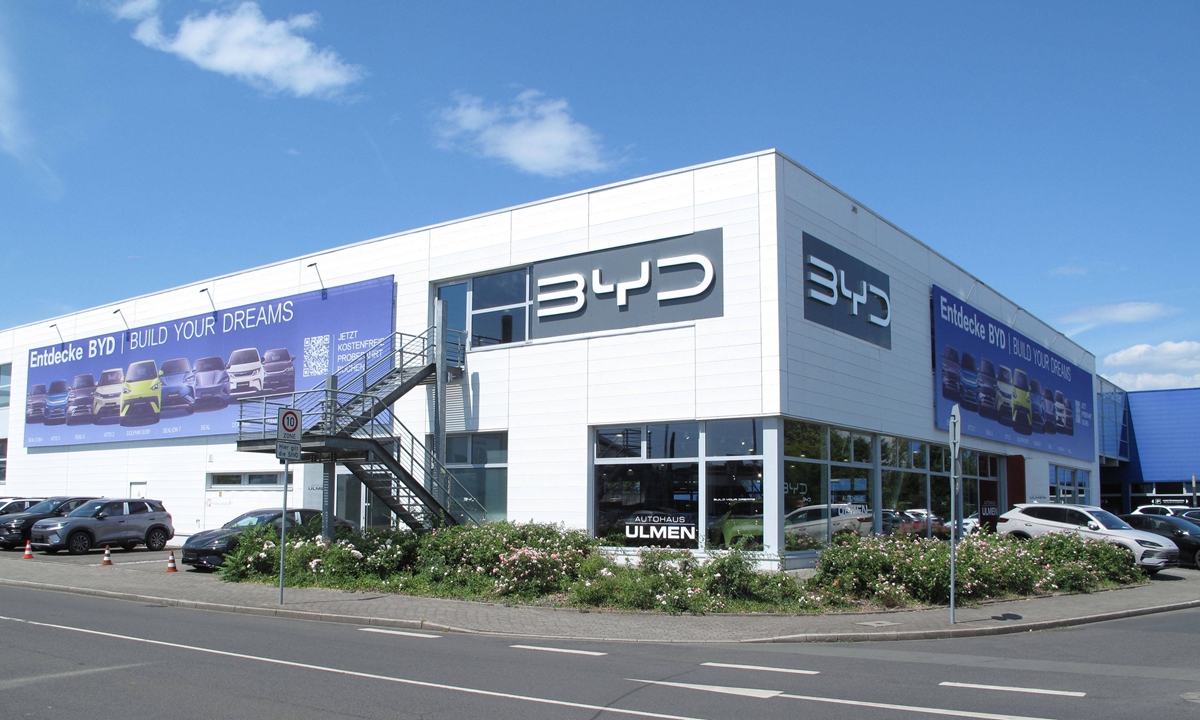
This is exactly where China‑Germany cooperation could deliver tangible results. According to the FDI Report 2025 published by Germany Trade & Invest (GTAI), the total number of foreign investment projects in Germany fell 9.3 percent overall to 1,564 in 2025. Nonetheless, Chinese companies became the largest source of foreign investment projects in Germany in 2025, overtaking the US for the first time since 2017.
Chinese companies launched 228 investment projects in Germany in 2025, up 14.6 percent year-on-year. More than one in five Chinese investment projects involved production and R&D activities, above the overall average for foreign investment projects in Germany. This is a sign that Chinese firms are deepening their integration into the local industrial base, according to GTAI.
Observers noted the trend, pointing out that China is becoming an important force in driving German re‑industrialization. In industries where Germany urgently needs to rebuild its competitive edge, such as electric vehicles, batteries, energy technology, digital manufacturing, and automation, China is emerging as an increasingly significant complementary partner. In these critical areas that will determine industrial competitiveness in the coming decades, the relationship between China and Germany is not merely one of rivalry; there are clear and substantial complementarities. Germany still boasts world‑leading engineering expertise, precision manufacturing capabilities, and a strategic location at the heart of the European market.
China has complete and highly integrated supply chains for raw materials and intermediate goods and large capacity for increasing production. When Chinese automakers set up R&D centers in Germany, or when Chinese tech firms collaborate with German factories to build smart production lines, the beneficiaries are not only the Chinese companies but also the German engineers who would otherwise face redundancy.
Cross‑border investment cannot flourish without a sound policy environment. Chinese companies are apparently willing to develop in Germany, but it can only happen on the premise that the German side provides a fair, reasonable and predictable business environment, reduces non-market interference in commercial activities, and allows capital to operate in accordance with market rules.
If the two countries are able to reach a deeper level of cooperation in investment, many of Germany's trade‑related concerns may well find more pragmatic solutions. The deep integration of industrial value chains would facilitate two‑way trade, creating renewed momentum for German exports of machinery, vehicles, chemicals, and other competitive products to China.
。 讯 据农业农村部消息,近日,农业农村部组织专业力量,派出6个工作组和11个科技小分队赴浙江等受台风影响较重地区,指导灾后恢复生产工作。 种植业方面,农业农村部调配排涝救灾机具,指导相关省份疏浚560万亩农田沟渠,及时抢排田间积水,修复受损设施,减轻渍涝影响;推动落实秋粮抗逆防灾喷施作业,促进作物恢复生长。 畜牧业方面,印发洪涝灾区动物防疫技术指南,指导地方开展死亡畜禽无害化处理和消毒灭源,防范次生疫情。

二 | 渔业方面,统筹协调东海区上海、江苏、浙江、福建4省(市)调整捕捞渔船出海时间,避开风雨影响;组织近4万名船东船长在线接受渔船安全课程培训,提升安全生产技能、压实安全生产责任。版权申明:凡注有“”或电头为“”的稿件,均为独家版权所有,未经许可不得转载或镜像;授权转载必须注明来源为“”,并保留“”的电头。 。
Current article:http://ffzrqb.taokenlaichunlei.bond/vdu/3qsg2y.html
Published on:15:17:18
栏目相关
- 【独自】愛子さま、宮内庁も報じなかった“極秘夕食会”、ラオス大使が明かしたお言葉と“贈り物”の中身
- 协议刚落地,沙特就被炸了,土巴直接装死,中东版北约成了笑话!,兵器展望,原创 协议刚落地,沙特就被炸了,土巴直接装死,中东版北约成了笑话!
- 多人在澳核酸检测呈阳性 中国男篮征调队员前往雅加达
- 殡仪馆馆长,被公安机关查获!
- 追平乔丹!米切尔连续7次季后赛G1砍下30+得分
- 微博借钱强制收取债务管理费
- 美团外卖,美团客服
- PM to have jam packed schedule in the run up to Deepawali
- 曝哈登已不耐烦了!希望尽快达成续约 骑士或退出库明加沃特森争夺战
- G2 和 EG 击败 ENVY 和 KRÜ 成功晋级季后赛
- 八米高灯笼点亮新加坡,中秋节来啦
- 外交部:中国和印尼同意设立更有雄心的双边贸易目标,北京日报,外交部:中国和印尼同意设立更有雄心的双边贸易目标
热门排行
- 政府今年将节省开支大举减税,有多少公务员会被裁?
- 外贸活力在这里持续迸发
- 中国福利彩票发行管理中心关于开展2026年中国福利彩票快乐8游戏派奖活动的公告
- 中科宇航力箭二号遥二运载火箭拟于今年10月完成发射
- 消息人士:美中东情报设施遭伊朗重创,修复或需数十亿美元
- Several states in Australia ordered to evacuate amid flood alert
- 从阿里官方服务商到全链路跨境平台,锦泰宏十年深耕铸就外贸服务标杆
- 斯诺克冠军联赛:中国军团5人晋级八强 赵心童成夺冠热门
- 千亿存储牛股营收狂飙近300% 半年赚了71亿元
- 华泰证券A股策略:布局盈利与筹码的“配置差”
- 辽宁省扩大报废农机补贴范围
- 投诉美团客服